Top 5 AI Tools for Content Marketing
Not more apps, but the right five: which AI tools actually carry their weight in content marketing, and why I cancelled the rest.
· 7 min
Honestly: most marketing setups today are choking on the sheer number of apps that were supposed to make everything easier. In practice, more tools almost never bring more output, mostly just fat data silos and teams that lose themselves in daily tool-hopping. A look at setups that really work shows something else: it's not the number of apps but the logical connection of the core systems that decides whether you scale or just burn time.
Why AI tools are making so much noise right now
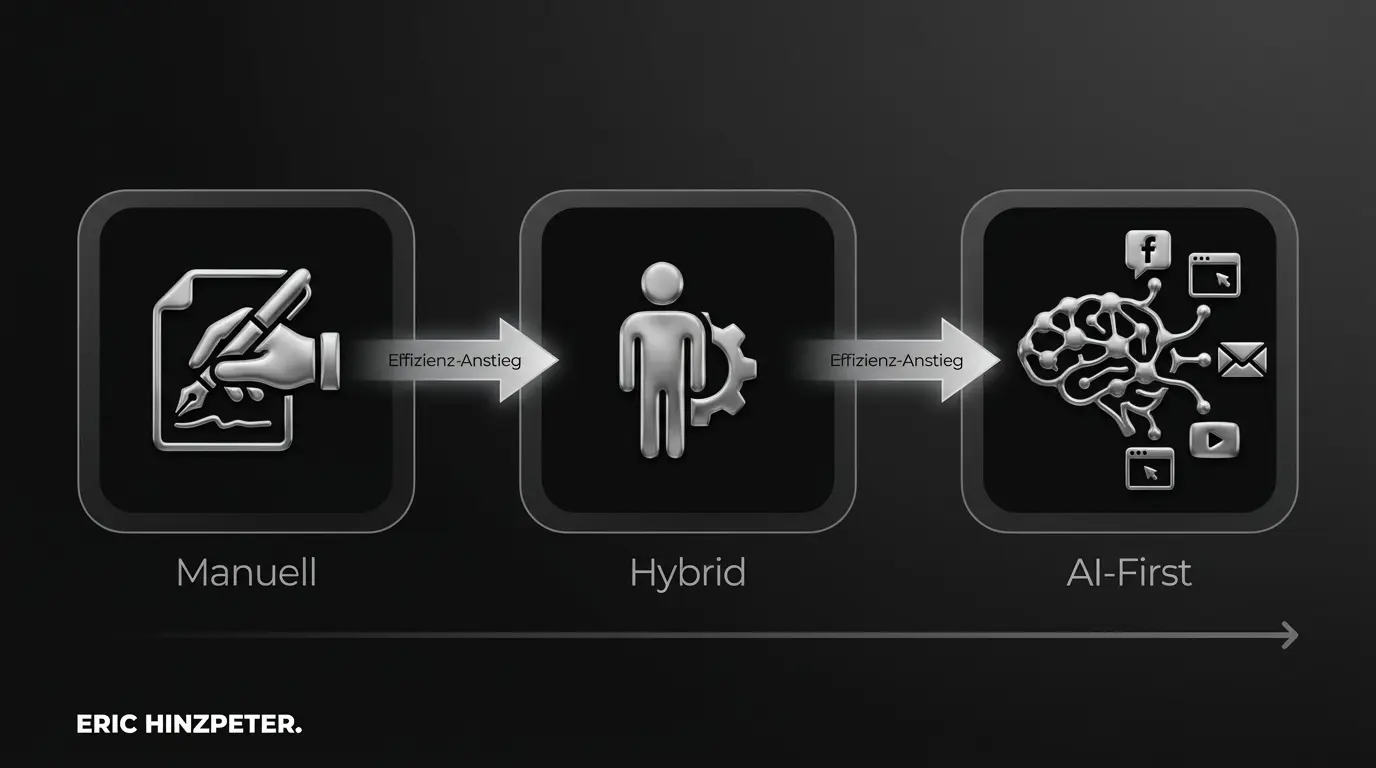
Artificial intelligence in marketing has evolved from embarrassing text spinners into real strategic partners. Not long ago, hundreds of small niche tools flooded the market; today we're seeing massive consolidation. Seriously, there's no point subscribing to a new app for every little task. The relevance lies with a few "powerhouses", systems with enormous computing power and deep context understanding.
Forget the talk of the big upheaval. What counts is the shift from operational box-ticking toward strategic steering. If you want to raise productivity, you can't get held up by toy tools that just wrap existing models in a pretty interface. For professional content marketing, only the top tier counts: the most capable LLMs, specialized image generators and real automation platforms.
For the basics, the content marketing glossary entry is worth a look.
What AI content creation really brings
High-end AI brings more than speed. It realigns how the work is structured. Content creation becomes scalable without quality automatically having to rise with cost. Where budget used to dictate publishing frequency, today only strategy decides, along with how cleverly your workflow is set up.
An often underestimated factor is personalization. AI adapts a core message for different audience segments in seconds, an effort that used to be hard to justify. Time-to-market also drops noticeably. Campaigns that used to need weeks of preparation can be executed in days today, if the workflow is set up logically.
1. The best LLMs for text and concepts: ChatGPT, Gemini 3.1 Pro, Claude Opus 5
In text generation there's no more room for compromise. Many "wrapper tools" are still popular, but pros work right at the source. Text generation at the highest level today runs almost exclusively through the model developers' flagships; anything else is mostly just unnecessary friction.
Three models stand apart for different purposes:
- ChatGPT (OpenAI, currently based on GPT-5.6) is the all-rounder. Its strengths are ideation, building solid structures and its broad knowledge base, the standard tool for the quick draft.
- Gemini 3.1 Pro (Google) plays to its strengths when real-time data and deep integration into the Google ecosystem are needed, often the better choice for data-driven research.
- Claude Opus 5 (Anthropic) is the specialist for nuance. On tone and complex analysis, Claude delivers results that sound less like a machine than the competition.
One concrete use case is audience analysis: instead of working with rigid personas, you can put the models in the role of a customer. Writing blog articles is also shifting from pure drafting toward curating and refining the AI output.
Pro tip: prompt engineering
Don't treat the LLM like a search engine, treat it like an experienced colleague. Use the role-task-context format: give the model a role (say, "senior editor"), a clear task and the context it needs before you expect the first output. Otherwise you mostly just get generic junk back.
2. High-end image generation: Midjourney and Nano Banana Pro
Stock photos are rapidly losing relevance, they look interchangeable and often just plastic. AI image generation has taken over this area. The focus is on tools whose results can hardly be told apart from human work anymore.
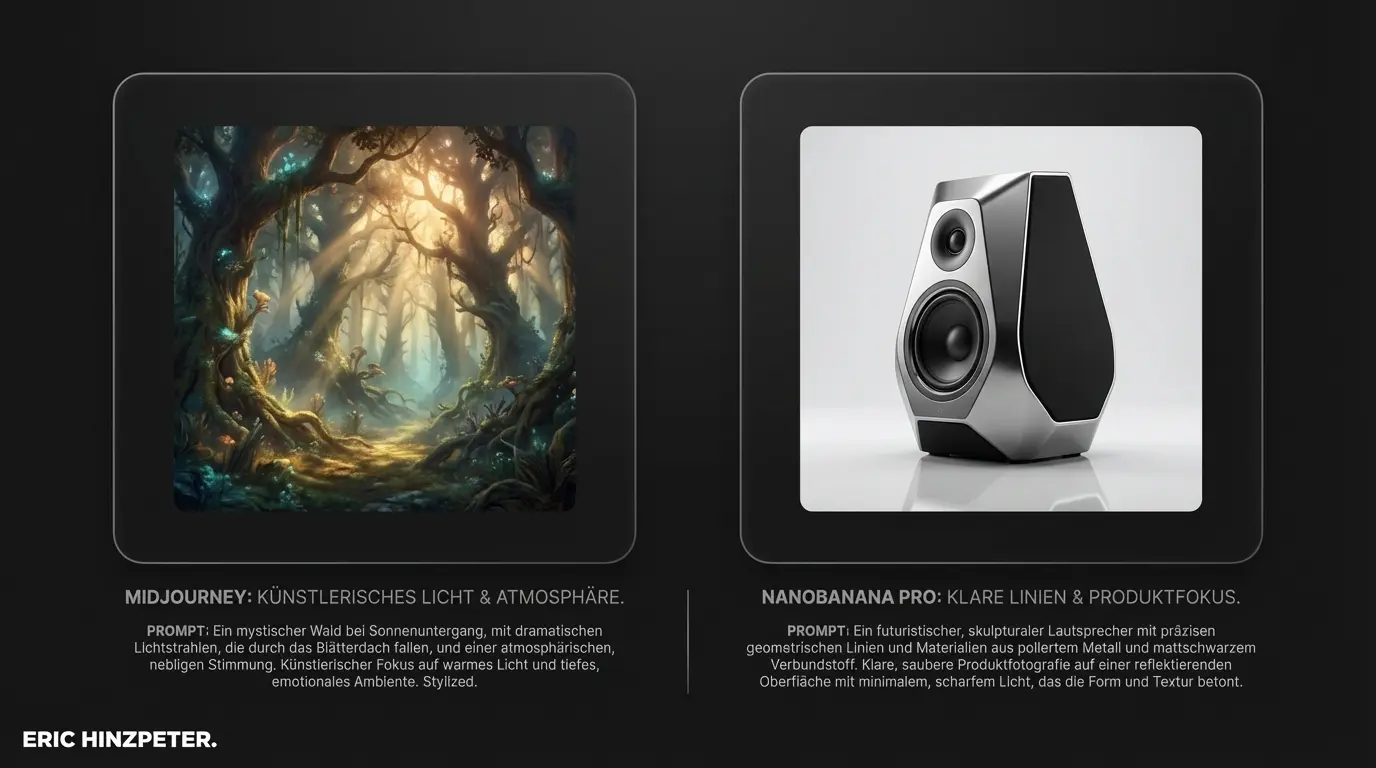
Midjourney is still the clear leader for top-tier aesthetics. The learning curve is a bit steeper, but the control over light, composition and style is unmatched. For marketing visuals meant to stir emotions, Midjourney is often the first choice.
Nano Banana Pro, Google's image model from the Gemini 3 line, is establishing itself as an alternative for certain workflows. While Midjourney often "dreams" artistically, Nano Banana Pro offers more precise control in some niches for consistent assets, with less artistic chance and more brand fidelity.
3. Next-generation video content: Magnific Spaces and Higgsfield
Video is the most important growth market, but production has been expensive and time-consuming so far. New AI tools are breaking down that barrier. We're not talking about simple slideshows here, but real generative video content.
Magnific Spaces, known as Freepik Spaces until its rename in April 2026, is a good option for fast, commercially usable assets, perfect for generating B-roll footage that would otherwise have to be licensed at high cost. For social media posts that's a noticeable efficiency lever.
Higgsfield, on the other hand, targets video generation with high consistency, especially for storytelling formats where styles have to stay stable across several scenes. That lets you test motion concepts before hiring an expensive production team.
Pro tip: video strategy
Use AI-generated videos as a mood board or for quick A/B tests on social media. Once a concept works organically, the investment in a high-end production really pays off.
4. Coding and web adjustments: Claude Code
Why does a coding tool show up in a marketing list? Because modern content strategy needs technical understanding. Whether it's landing pages or data scraping, marketers today need to be able to clear technical hurdles themselves instead of opening a ticket with IT for every comma.
Claude Code leads the field here. It works as a technical assistant that doesn't just write code but also explains it. A look at your own AI tool stack often shows that many paid mini-tools can be replaced with your own scripts, which saves budget and makes you independent too.
5. The bracket for everything: automation with n8n
The best tools are worthless if they work in isolation. Copy-paste is the enemy of any scaling. This is where automation comes in. Beginners often reach for Zapier, pros for n8n.
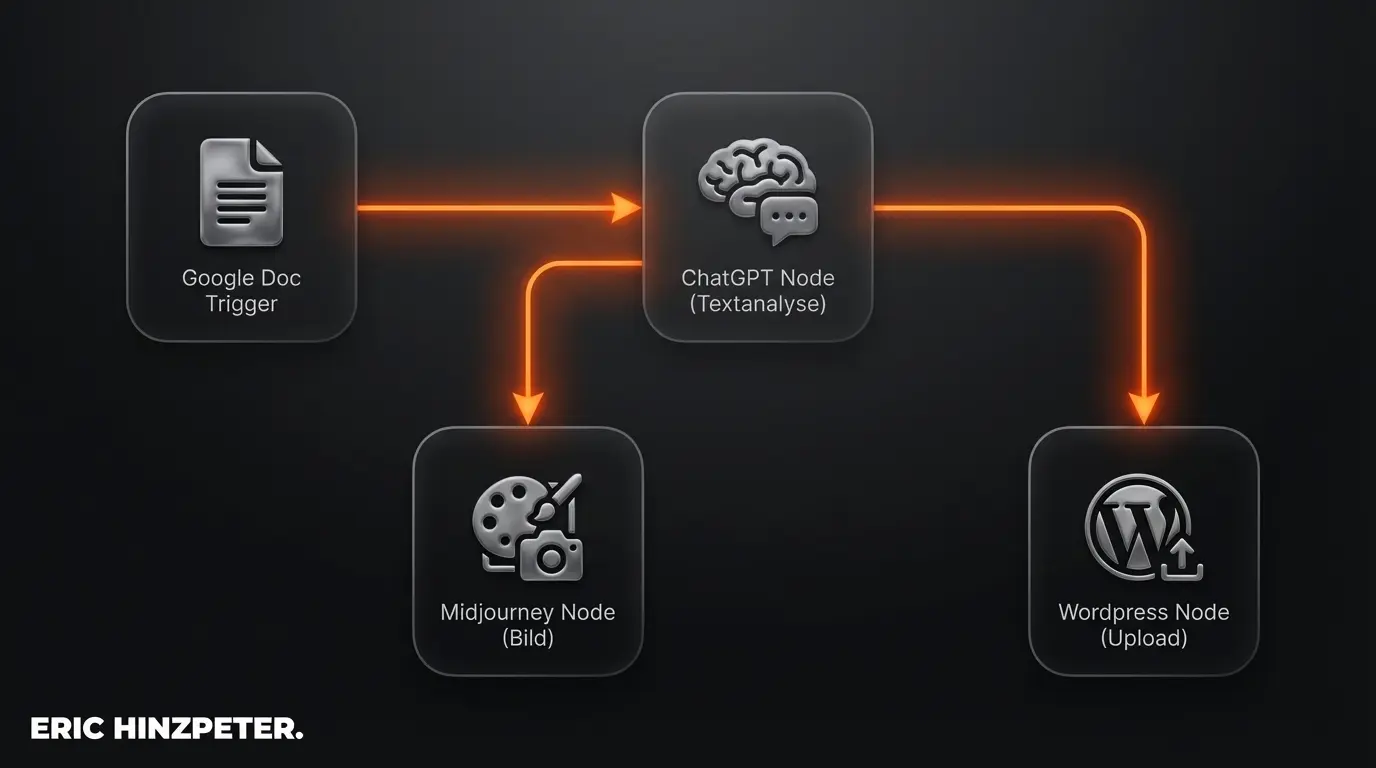
n8n can map complex logic. A typical workflow: a draft in Google Docs triggers n8n, which sends the text to ChatGPT for editing, generates an image through Midjourney and saves everything straight to the CMS. This bracket connects the isolated islands into one continuous machine. If you haven't built an n8n workflow yourself yet, five beginner workflows for marketing are a good starting point.
Looking ahead: invisible AI
We're in a transition phase. The focus on separate AI tools will decrease in the long run, because the technologies are simply becoming native features in the apps we use every day anyway, like Copilot in Microsoft 365 or Firefly in Adobe.
For strategy, that means the separate "tool stack" merges with the existing programs. AI becomes a basic function, not a separate work step. If you understand that today, you'll build your systems differently.
Limits and ethical challenges
Using this technology demands a high degree of responsibility. Especially in the context of E-E-A-T, you can't trust AI blindly. AI hallucinates; it invents facts when it doesn't have any. That's why the human in the loop remains essential.
Tools like DeepL also often fail at cultural nuances that matter a lot for how a brand is perceived. If you want to play it safe, use AI as a tool for creation, not as the sole author. My AI phrase checker shows exactly those spots, generic phrasing, chatbot leftovers and patterns that make a text read like AI output, before they go online. More on that in the article on authentic content despite AI.
How to build your AI tool stack
Success doesn't depend on owning these tools but on connecting them logically. Don't start with everything at once. First put the content strategy for text in place, then automate distribution, and only after that add visual components.
If you'd rather start with a few free tools than invest in flagship models right away, my twelve free browser tools are a way in. The logic behind it stays the same, though: connect the systems cleanly first, then scale.
FAQ
- Which AI tools are best for content marketing?
- A small core instead of a big stack: the flagship LLMs (ChatGPT, Gemini 3.1 Pro, Claude Opus 5) for text and concepts, Midjourney and Nano Banana Pro for images, Magnific Spaces and Higgsfield for video, Claude Code for technical adjustments and n8n to connect it all.
- Should I use wrapper tools or work directly with the LLMs?
- Work at the source. Many popular "wrapper tools" just put existing models in a pretty interface and add extra friction along the way. Pros use the flagship LLMs directly (ChatGPT, Gemini, Claude) and save specialized tools for image, video and automation, where they really bring new capabilities.
- Can AI replace humans in content creation?
- No. AI hallucinates and invents facts when it doesn't have any, and tools like DeepL often fail at cultural nuances that matter a lot for how a brand is perceived. Especially in the context of E-E-A-T, the human in the loop remains essential. AI is a tool for creation, not the sole author.

Eric Hinzpeter
Eric Hinzpeter, Senior B2B Content Strategist. He builds AI agents and marketing automation for production use and writes up what comes out of it here.