NOTE· 2025-12-28· 6 min
Top 5 AI Tools for Content Marketing
Not more apps, the right five: which AI tools in content marketing actually carry weight, and why I cancelled the rest.
Honestly: most marketing setups today choke on the sheer mass of apps that are supposed to make everything easier. From practice: an excess of tools rarely produces more output, usually only fat data silos and teams that lose themselves in operational "tool hopping". A look at really successful setups proves it: the logical link between core systems decides whether you scale or only burn time, not the number of apps.
What AI tools are and why there's so much noise around them
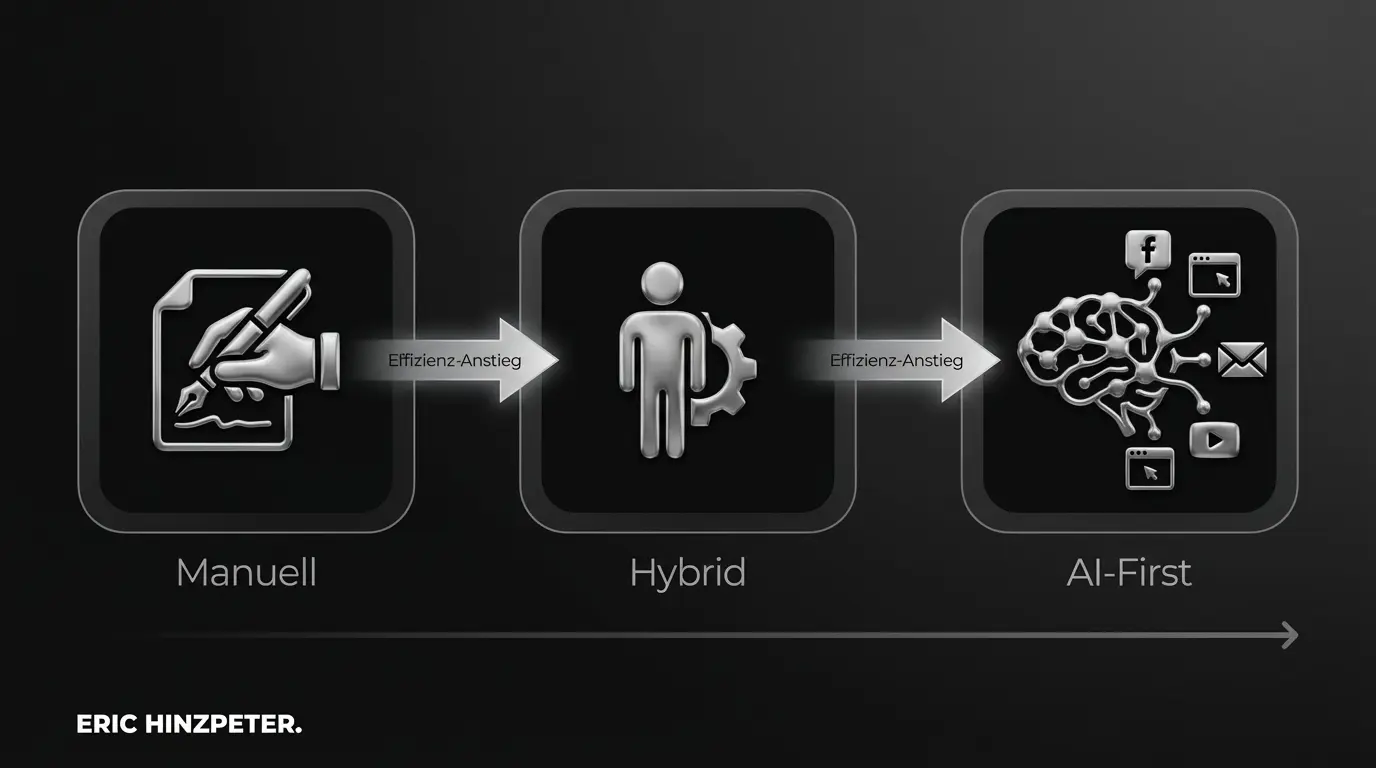
AI in marketing has moved from embarrassing text spinners to real strategic partners. Where small niche tools used to flood the market, today we see massive consolidation. Honestly: there's no point subscribing to a new app for every action. Relevance sits with a few "powerhouses": systems with serious compute and deep context understanding.
Forget the talk of revolution. What matters is the shift from operational grind toward strategic orchestration. To raise productivity, don't get stuck with "toy tools" that only wrap existing models in a pretty UI. Professional content marketing has to focus on the top: the most capable LLMs, specialized image generators, and real automation platforms.
For a deeper grasp of the basics, the content marketing fundamentals post helps.
The advantages of AI in content creation
Using high-end AI isn't only a speed gain. It's a structural realignment. Content creation scales without quality having to rise linearly with cost. Where budget caps used to dictate publishing frequency, today strategy decides, and how smart your workflow is.
An often underestimated factor is personalization. AI makes it possible to adapt a core message in seconds for different audience segments, a manual effort that used to be hard to justify. Time to market also drops sharply. Campaigns that used to take weeks of preparation can ship in days when the workflow is set up logically.
1. The best LLMs for text and concept (ChatGPT 5.2, Gemini 3 Pro, Claude Opus 4.5)
In the league of text generation there's no room for compromise anymore. While many "wrapper tools" remain popular, pros work at the source. Text generation at the top happens almost exclusively through the flagships of the model developers. Anything else is usually unnecessary friction.
Three clear favorites differentiate for different uses:
- ChatGPT 5.2 (OpenAI): The all-rounder. Its strength is ideation, building solid structures, and a broad knowledge base. The standard tool for the quick draft.
- Gemini 3 Pro (Google): This model plays its strengths when real-time data and deep Google ecosystem integration matter. For data-driven research often the better choice.
- Claude Opus 4.5 (Anthropic): The specialist for nuance. When tone and complex analysis matter, Claude delivers results that read less "machine" than the competition.
A concrete use case is audience analysis: instead of static personas, you can put these models into the role of a customer. Writing a blog post also shifts from pure drafting to curating and refining the AI outputs.
Pro tip: prompt engineering
Don't treat the LLM like a search engine, treat it like a smart colleague. Use the "role-task-context" format: give the model a role (e.g., "senior editor"), a clear task, and the context it needs before you expect the first output. Otherwise you usually get generic junk back.
2. High-end image generation: Midjourney & NanoBanana Pro
Stock photos are losing relevance fast. They feel interchangeable and often look plastic. Image generation via AI has taken over this area. We focus on tools that deliver results hard to tell from human work.
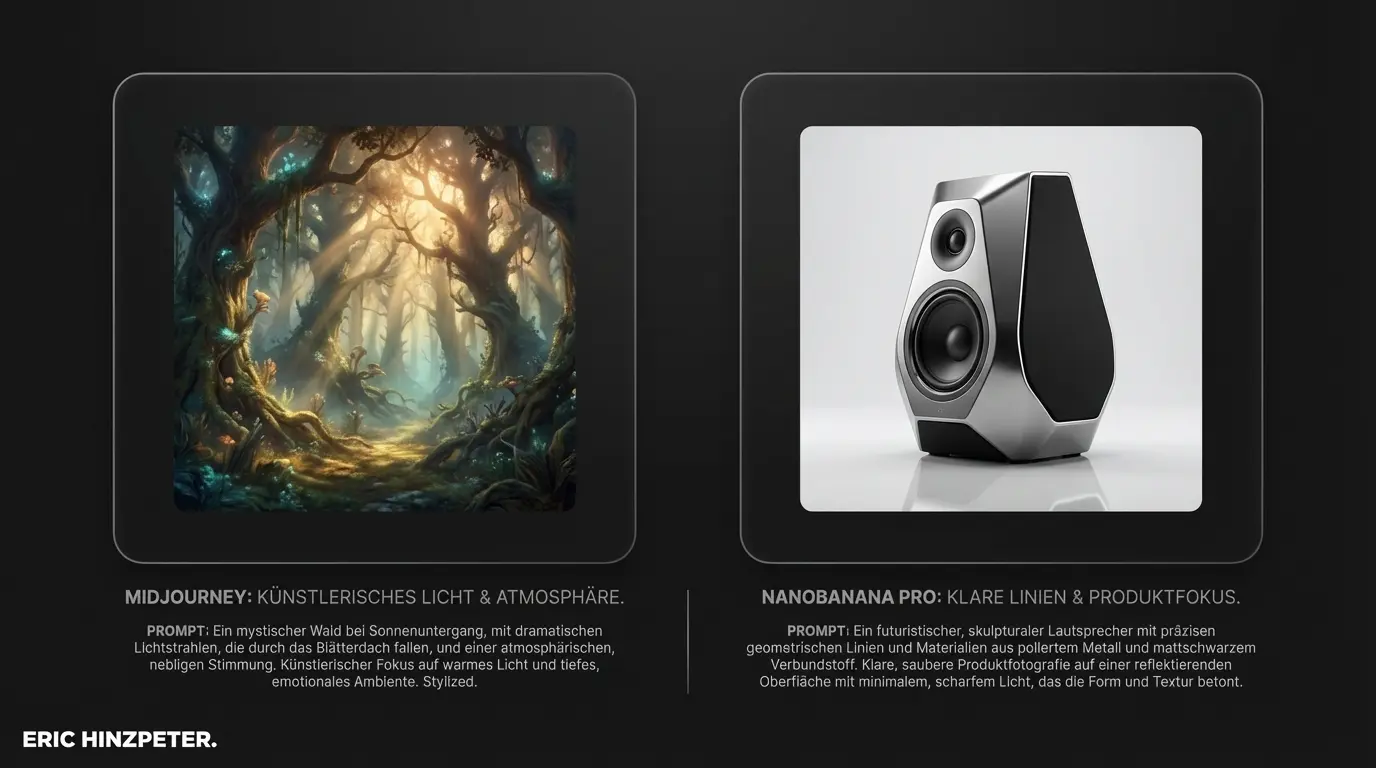
Midjourney remains the leader for top aesthetics. The learning curve is a bit steeper, but the control over light, composition, and style is unmatched. For marketing visuals that should evoke emotion, Midjourney is often the first pick.
As a specific alternative, NanoBanana Pro is establishing itself for certain workflows. While Midjourney often "dreams" artistically, NanoBanana Pro offers in some niches more precise control for consistent assets that require less artistic chance and more brand fidelity.
3. Next-generation video content: Freepik Spaces & Higgsfield
Video is the most important growth market, but production was expensive and time-consuming. New AI tools break this barrier. We're talking real generative video content, not simple slideshows.
Freepik Spaces is a good option for fast, commercially usable assets. Useful for generating B-roll material that would otherwise need to be licensed expensively. For social media posts, a big efficiency lever.
Higgsfield targets video generation with high consistency. Especially for storytelling formats where styles need to stay stable across scenes. It lets us test motion concepts before commissioning an expensive production team.
Pro tip: video strategy
Use AI-generated video as a "mood board" or for fast A/B tests on social media. When a concept works organically, the investment in a high-end production pays off.
4. Coding and web edits: Claude Code
Why does a coding tool show up in a marketing list? Because modern content strategy needs technical understanding. Whether it's landing pages or data scraping, marketers today have to clear technical hurdles on their own, rather than opening a ticket with IT for every comma.
Claude Code leads here. It acts as a technical assistant that not only writes code but also explains it. A look at your own AI tool stack often shows that many paid mini-tools can be replaced with your own scripts. That doesn't only save budget, it makes you independent.
5. The bracket for everything: automation with n8n
The best tools are worthless when they work isolated. Copy-paste is the enemy of scale. That's where automation comes in. Beginners often go to Zapier, pros pick n8n.
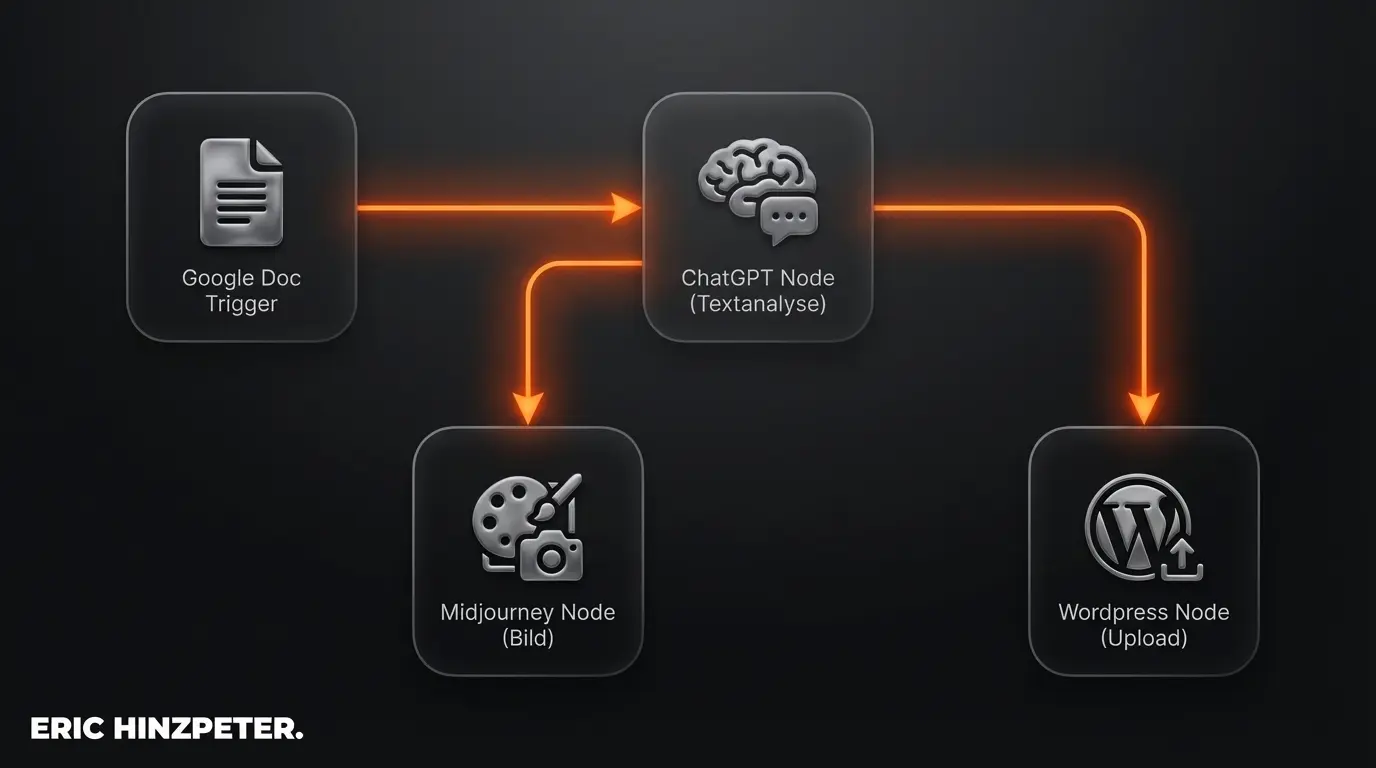
n8n lets you model complex logic. A typical workflow: a draft in Google Docs triggers n8n, which sends the text to ChatGPT for editing, generates an image via Midjourney, and saves everything directly in the CMS. This "bracket" connects the isolated islands into one integrated machine.
Outlook: the invisible AI (CoPilot, Firefly & co.)
We're in a transition phase. The focus on separate AI tools will fade long term. The future of content creation sits in "invisible AI". The technologies become native features in the apps we already use.
The conclusion for strategy: the separate "tool stack" will merge. AI becomes a base function, not a separate work step. Whoever gets this today builds their systems differently.
Limits and ethical challenges
Despite the hype, using this tech requires real responsibility. Especially in the context of E-E-A-T, you can't trust AI blindly. AI hallucinates: it invents facts when it has none. The "human in the loop" remains essential. Tools like DeepL also often miss cultural nuance that's decisive for brand perception.
To be safe, use AI as a tool for creation, not as the sole author. More on this in the post on authentic content despite AI.
Bottom line: how to integrate AI tools successfully
Success doesn't depend on owning these tools, but on their logical linkage. Don't start with everything at once. Implement the content strategy for text first, then automate distribution, then add visual components. Logic decides the success of the automation.
FAQ
- What are the best AI tools for content marketing?
- A small core, not a big stack: the flagship LLMs (ChatGPT 5.2, Gemini 3 Pro, Claude Opus 4.5) for text and concept, Midjourney and NanoBanana Pro for images, Freepik Spaces and Higgsfield for video, Claude Code for technical edits, and n8n to automate and connect them all.
- Should I use wrapper tools or work directly with the LLMs?
- Work at the source. Many popular 'wrapper tools' just put a pretty UI on existing models and add friction. Pros use the flagship LLMs directly (ChatGPT, Gemini, Claude) and reserve specialized tools for image, video, and automation, where they genuinely add capability.
- Can AI replace the human in content creation?
- No. AI hallucinates and invents facts when it lacks them, and tools like DeepL often miss cultural nuance that shapes brand perception. Especially under E-E-A-T, keep a human in the loop and use AI for creation, not as the sole author.